

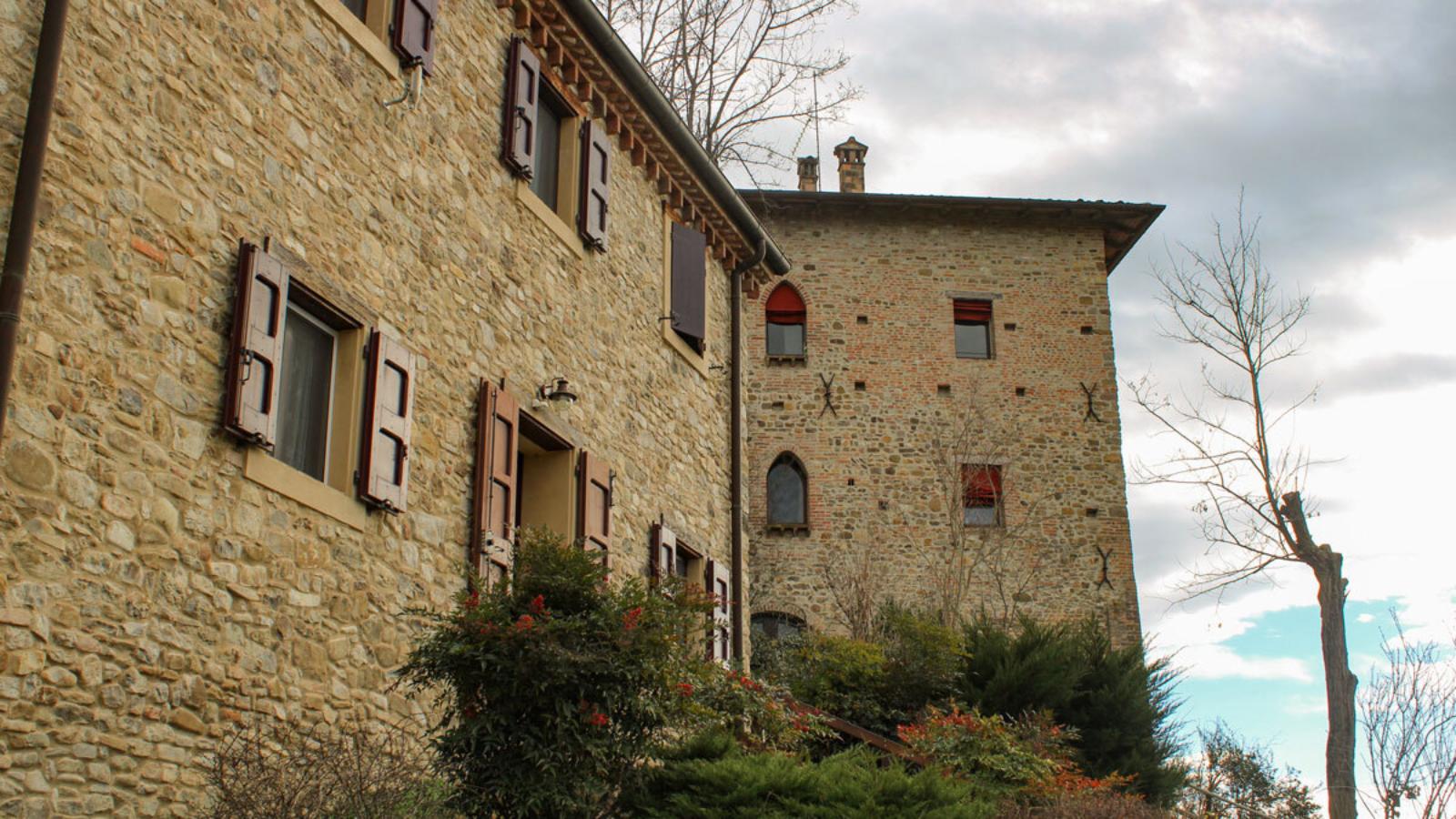
Oliveto is located a short distance from Monteveglio, in a scenic position on a hill. In the year 776, the settlement of Oliveto—then called Casale Sociorum—was donated by the Lombard dukes to the Abbey of Nonantola, which included it in its fiefdom until 1131, when the people of Oliveto gained independence, forming a free municipality (which lasted for about a century before voluntarily joining the municipality of Bologna).
In 1803, Napoleon's French forces, who had invaded the region, suppressed the municipality of Oliveto, incorporating its territory into the municipality of Monteveglio. Starting from the 10th century, the village began to be known by the name we use today, derived from the name of the hill (Monte Oliveto), itself inspired by the area's characteristic vegetation, made up of olive trees.
Some ancient monuments from historic Oliveto have survived. Among them, for example, is a large medieval building called Casa Grande dell’Ebreo ("The Great House of the Jew"), built in 1410 by Salomon Mathasia, which served as the seat of the Jewish community and housed the area's first bank. Another is La Bronzina, which in 1527 served as an inn for Spanish nobles and was later used as a plague hospital, and then as a bronze foundry around 1775.
In the past, the village hosted an annual event in March called the Festa della Saracca. This festival, of Spanish inspiration, was inherited from the time of the Spanish presence in 1527. The centerpiece of the celebration is the Funeral of the Saracca, or sardine, which is buried at the foot of a wooden cross—symbolizing the desire to cast off one’s miseries ("burying" them) and escape from fasting.
Oliveto is also one of the stops along the Via dei Brentatori, a trail that connects Bologna to Bazzano, crossing the Valsamoggia region along the ancient paths once traveled by porters of grapes and wine.
Map
Oliveto
40050 Monteveglio